Use Cases for Your Customers, Teams, and Now Partners
By Dickey Singh, Cast.app
Intro
Growth no longer comes only from direct customers. Since Cast exists to grow and scale revenue, not teams, Cast focuses on the three places it actually happens in B2B today:
• direct and indirect customers,
• internal customer and revenue orgs, and
• more recently, the partners who increasingly own entire books of business.
Whether you are a scaling startup testing channel motions or a PE-backed or public company with a mature ecosystem, those three fronts eventually converge.
Cast started by helping large B2B enterprises like HPE, Pure Storage, Google, Ruckus, Buyers Edge, Intelex (Fortive), and others reach 100% of their accounts with customer-facing AI agents. Over the last nine months, the same Autopilot has been quietly powering partner motions as well.
This article lays out how Cast now treats customers, teams, and partners as three connected fronts of the same Autopilot.
Cast treats customers, teams, and partners as three connected fronts of the same Autopilot.
In this article, we’ll share: the One Autopilot, three fronts, with use cases for
B2B growth increasingly runs through complex partner ecosystems, not just direct sales and CX/CS.
Cast’s Autopilot AI Agents already handle customer-facing lifecycle, feedback, and support at scale.
Internally, they provide revenue & renewal intelligence and pre-meeting QuickBriefs so teams and executives never walk into a conversation cold.
The same Autopilot now extends to Partner Success & Accountability:
Partner onboarding, enablement, and reactivation
Partner satisfaction (PSAT) and feedback
Partner accountability across PSAT, ARR, NRR, and health
Indirect (partner-managed) customer lifecycle experiences, co-branded or partner-branded
One system of AI agents; three fronts:
Your direct & indirect customers
Your customer & revenue orgs
Your partners and the indirect customers they manage
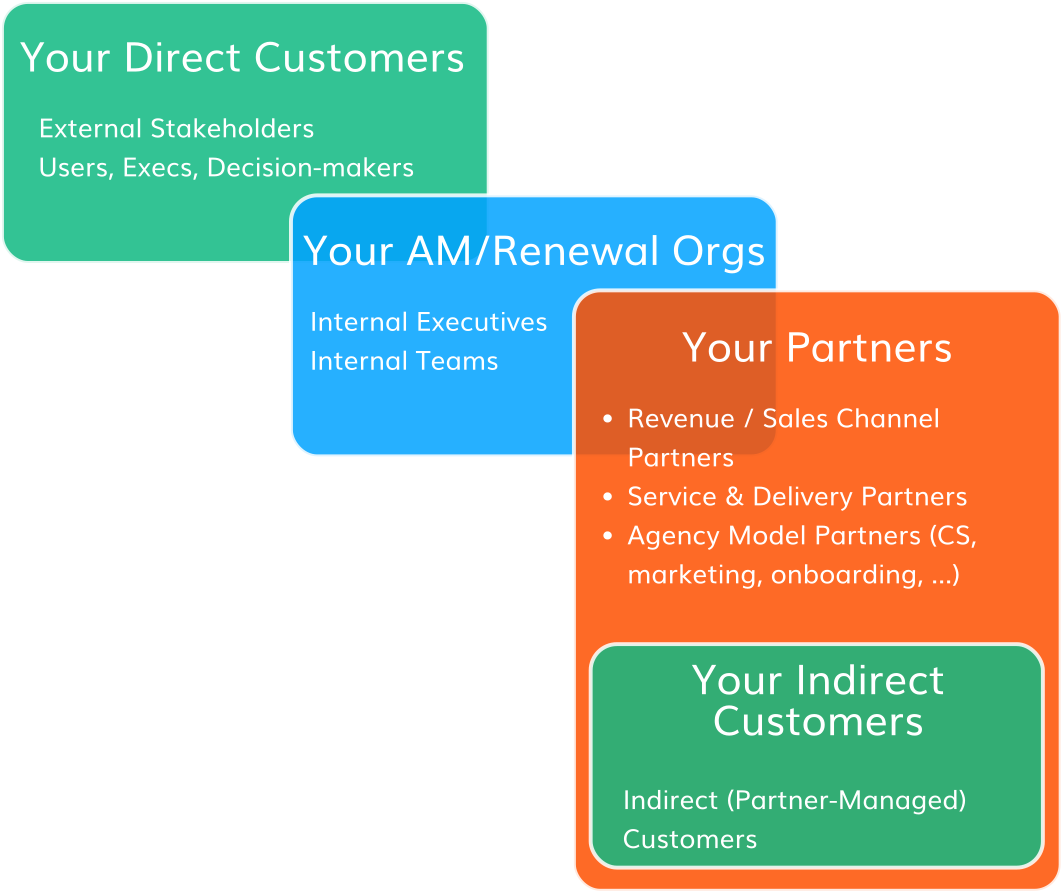
What We Mean by “Partners”
When we say partners, we are intentionally broad. Most large B2B enterprises work with several partner types at once, often in overlapping ways.
We group them into three main categories.
1. Revenue / Sales Channel Partners
These are partners involved directly in selling and commercial motions:
Resellers / VARs / Distributors
Buy from the vendor and resell to the customer
Invoice the customer and earn margin
Referral Partners
Introduce and warm up opportunities
Vendor bills the customer directly
Partner receives a finder’s fee or referral commission
MSPs (Managed Service Providers)
Operate a managed service (often bundling the vendor’s product)
May resell and bundle the product into a monthly/annual service
Typically invoice the customer for the entire managed service
Other channel motions (OEM, white-label, co-sell, etc.)
The brand on the invoice and who owns the relationship can vary, but the partner is a key part of the sales and renewal motion.
2. Service & Delivery Partners
These are partners that make the solution real for the end customer:
Implement and integrate
Operate and manage day-to-day usage
Provide ongoing support
Train and certify customer teams
In practice, they are on the hook for:
Time-to-value
Adoption quality
“It just works” expectations
3. Agency-Model Partners
Agency-model partners act as an extended arm of the vendor in front of the customer:
Marketing agencies that drive campaigns and pipeline
Customer success / CX agencies that manage onboarding, QBRs, and renewals
RevOps / GTM agencies that design and run parts of the commercial engine
In these cases:
The customer typically contracts directly with the vendor for the software
The agency earns:
Service fees, and/or
Commissions or incentives tied to influenced revenue, adoption, and retention
Cast’s Partner Success & Accountability model is designed to work across all three groups—channel, delivery, and agency—without forcing a single rigid definition.
Use Cases at a Glance: One Autopilot, Three Fronts
Before diving into details, it helps to look at the big picture.
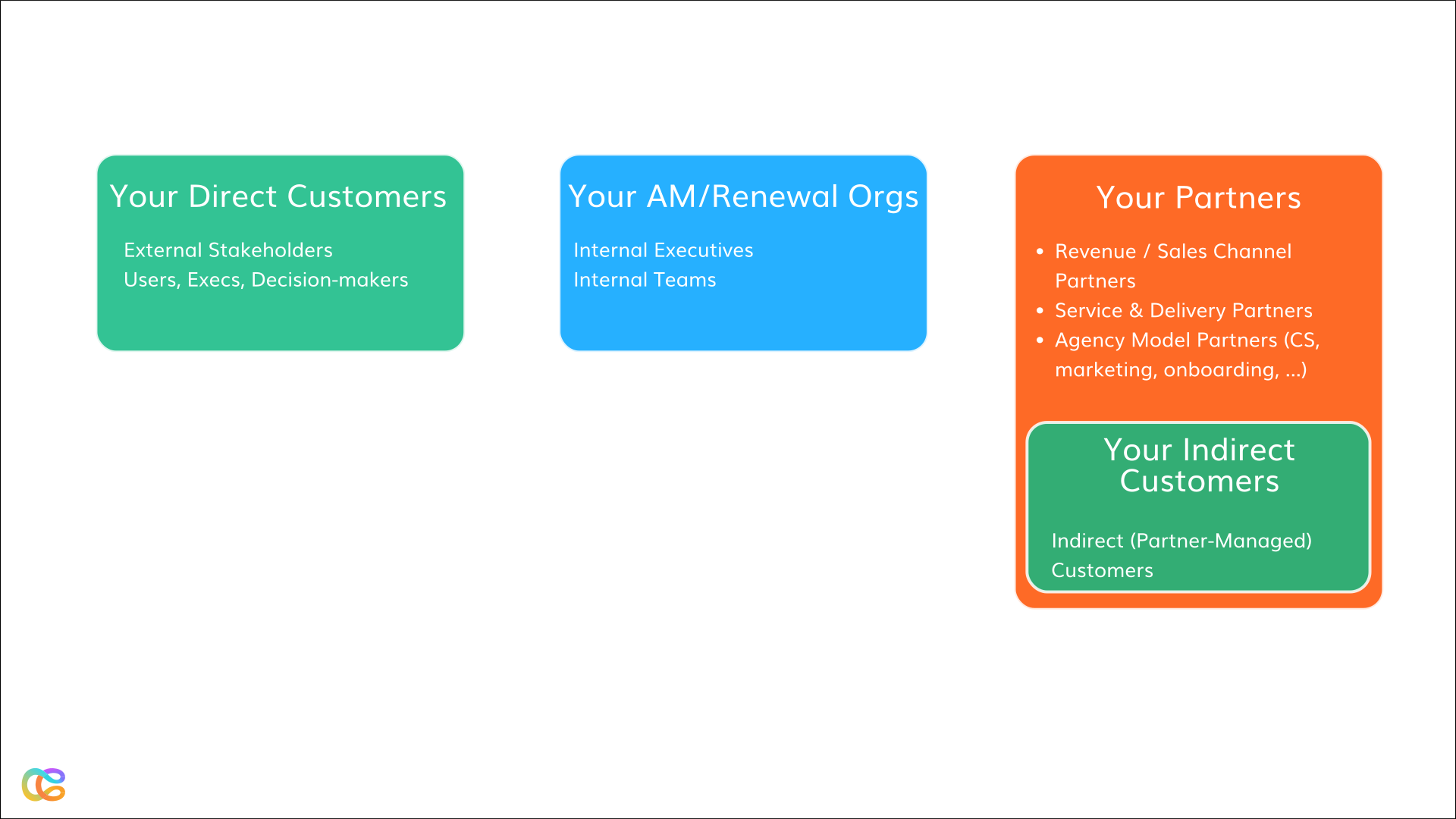
Cast runs one Autopilot that can face three fronts simultaneously:
Users, executives, and decision-makers at customer accounts
Customer & revenue orgs
CS, AM, Sales, and internal executives
Partners & indirect (partner-managed) customers
Channel and delivery partners
The customers those partners serve
The “One Autopilot. Three Fronts.” graphic shows these three fronts side-by-side, with AI agents sitting in the middle as the always-on engine.
Use Cases for Your Direct & Indirect Customers
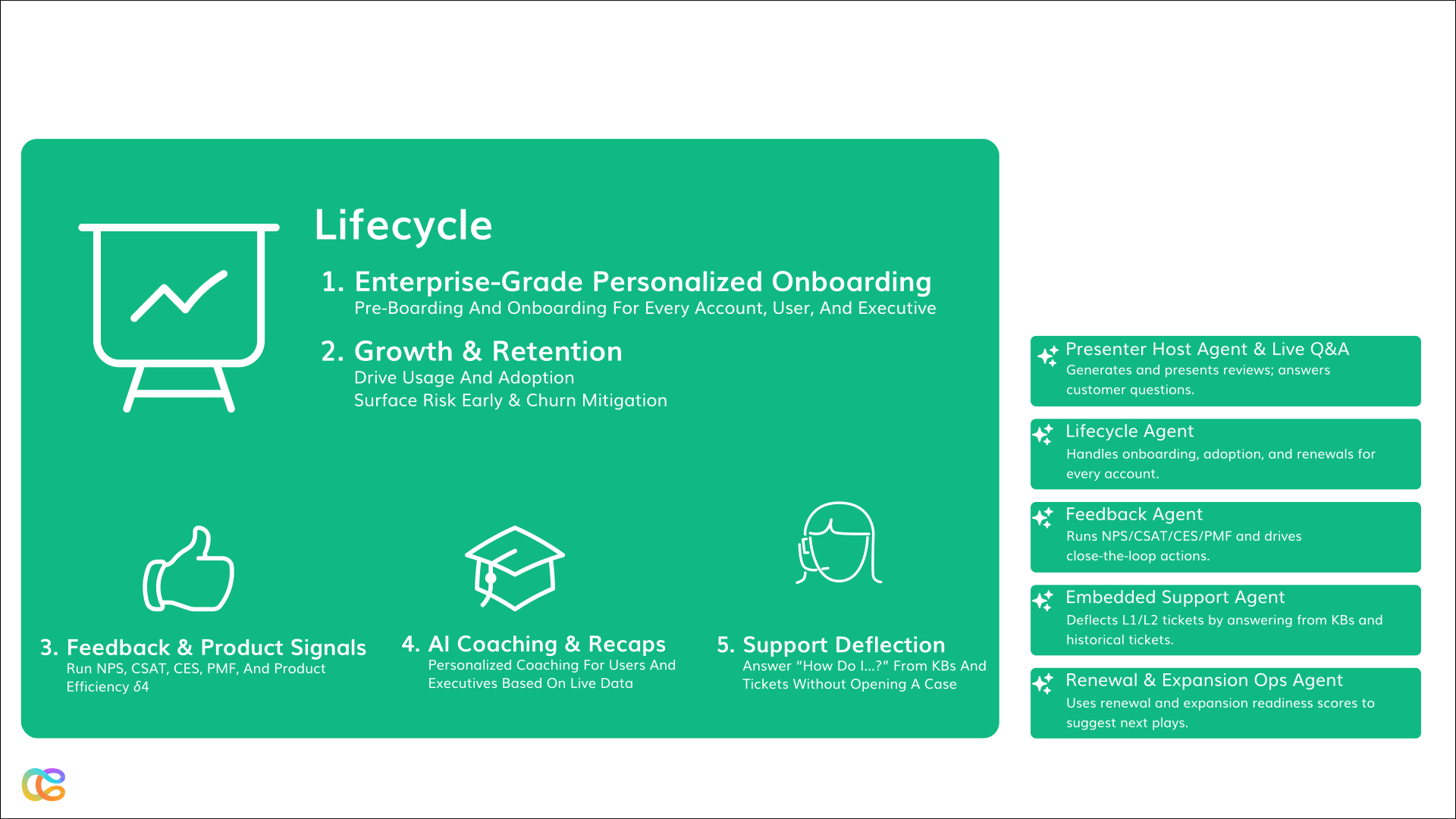
For direct and indirect customers, Cast’s Autopilot focuses on lifecycle, feedback, and support deflection—delivered as self-updating, AI-presented experiences instead of emails, static decks, and survey links.
For direct and indirect customers, Cast’s Autopilot focuses on lifecycle, feedback, and support deflection
Lifecycle & Growth: From Pre-boarding to Expansion
AI Lifecycle Agents generate and present:
Welcome and pre-boarding experiences
Onboarding journeys tailored to each account, user, and executive
Adoption and value realization updates that highlight what’s working, what’s under-used, and what to try next
Retention and renewals guidance, making upcoming renewals predictable rather than reactive
Expansion opportunities:
Feature upsell
Product cross-sell
License growth
Every presentation is:
Self-updating based on live data
Generated for every relevant contact at every account
Delivered as a hosted AI-presented briefing (not just a PDF link)
Feedback & Product Signals
Feedback Agents run:
NPS, CSAT, CES, PMF, and other feedback programs including CES & OES
Product usage and efficiency analysis over time
Instead of raw survey charts, customers see:
Audio-visual summaries
Clear “what we heard, what we’re doing next” loops
Calls-to-action embedded directly into the experience
Embedded Support Deflection
Embedded Support Agents:
Answer “How do I…?” questions from:
Knowledge bases
Historical tickets
Everything documents anywhere
Deflect L1/L2 support where possible
Escalate cleanly when a human needs to step in
For customers, this feels like:
A single, always-available guide
Embedded directly into their business review and onboarding experiences
Not confined by departments and business units.
Use Cases for Your Customer & Revenue Orgs
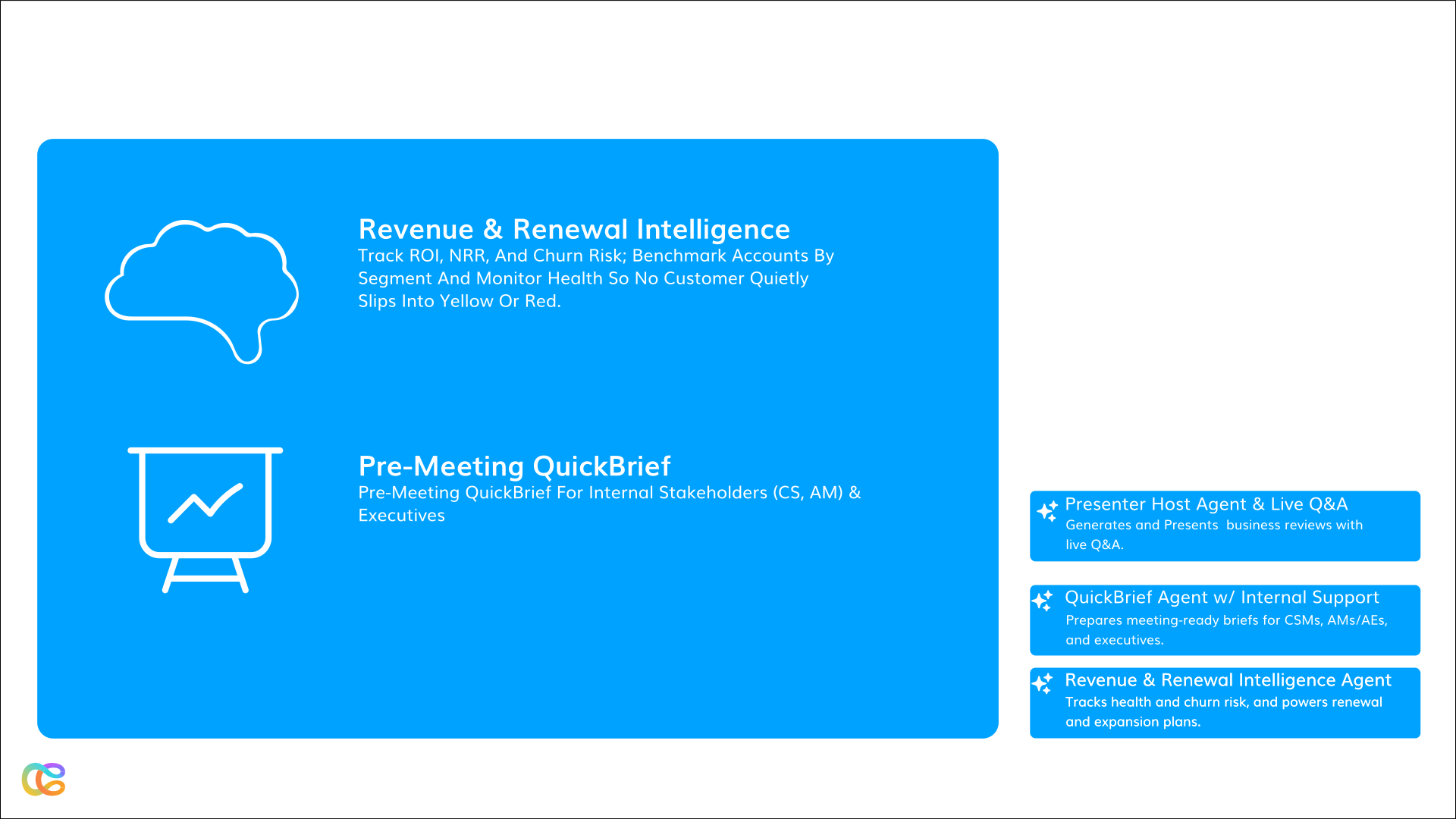
Internally, Cast supports CS, account management, sales, and executives with AI agents that keep everyone aligned on risk, opportunity, and story.
Internally, Cast supports CS, account management, sales, and executives with AI agents that keep everyone aligned on risk, opportunity, and story.
Revenue & Renewal Intelligence
Revenue & Renewal Intelligence Agents help internal leaders and teams:
Track ROI at account, segment, and portfolio levels
Monitor NRR and churn risk across the base
Benchmark accounts by segment so no customer quietly slips into yellow or red
This is less about another dashboard, and more about:
If a vendor’s customer is Acme and their partner is Marron Partners, Cast can:
Generate business reviews and onboarding journeys on behalf of Marron Partners, with:
Marron’s branding
Marron’s messaging
Data from the vendor and the partner’s systems
Present these as AI-hosted briefings to end customers
Still feed performance and feedback signals back to the vendor
The Presenter Host Agent appears as the host, with live Q&A, but the face and framing can be partner-first, vendor-first, or co-branded.
2. Partner Lifecycle, Success & Reactivation
For partners themselves, vendors can treat partners as a portfolio of accounts:
Partner onboarding and pre-boarding
Introduce the program
Activate the first set of plays
Ongoing partner success
Keep partners updated on:
Pipeline
Training status
Customer outcomes they influence
Dormant-partner reactivation
Identify partners who have gone quiet
Send tailored AI-presented briefings:
“Here’s what you could be earning”
“Here’s where similar partners are succeeding”
Partner Lifecycle Agents orchestrate this entire journey.
3. Partner Satisfaction & Accountability
Feedback and Accountability Agents focus on PSAT and performance:
Run Partner Satisfaction (PSAT) programs
Aggregate and interpret partner feedback
Track partner-driven ARR and NRR
Benchmark partners by:
Health
PSAT
Revenue and retention impact
From there, Cast can:
Flag top performers and at-risk partners
Suggest specific actions:
More enablement
Joint campaigns
Commercial discussions where needed
In short: Partner Success teams don’t just see “number of partners” or “tier.” They see which partners are truly driving outcomes and where systems need to change.
4. Embedded Support Deflection for Partners
Embedded Support Agents work for partners just as they do for customers:
Answer “How do we…?” questions about:
Programs
MDF
Tools and portals
Implementation patterns
Deflect basic tickets to self-service
Escalate to the right vendor teams when a human needs to help
This reduces friction for partners and keeps Partner Success teams focused on higher-value work.
The only difference is whose logo and story leads the conversation:
Vendor-only
Partner-only
Co-branded
Where This Is Going Next
This article is the external-facing foundation for Partner Success & Accountability:
Clear, flexible definition of partners
A single Autopilot spanning customers, teams, and partners
Concrete use cases for:
Direct and indirect customers
Customer and revenue orgs
Partners and indirect (partner-managed) customers
Alongside this blog, the attached graphics will make the model visual:
One Autopilot. Three Fronts.
Use Cases for Direct & Indirect Customers
Use Cases for Customer & Revenue Orgs
Use Cases for Partners & Indirect Customers
From here, it becomes natural to introduce the next wave: real-world stories, partner program patterns from customer leaders, and how AI agents can carry more of the heavy lifting across all three fronts.